

As the first and only designer on LumApps’ video editor, I delivered the first version in four months and tested an improved design with beta users. 100% preferred it, and it helped reach €1M ARR in seven months.
In June 2021, LumApps acquired Novastream, a B2B video management platform. As video became a strategic priority, a new feature team — Play — was created to integrate Novastream’s core offering into the LumApps ecosystem.
I volunteered to join this team as the Product Designer at the start of the project. I later worked with another designer and led the entire design stream of the feature.
Due to a customer commitment, we had only 4 months to deliver a production-ready version. We relied on Novastream’s 10 years of product knowledge, as we had no time for early-stage user research.
One of the initial challenges was to onboard the former Novastream team into LumApps’ design processes and tooling, including the use of Figma and internal design rituals.
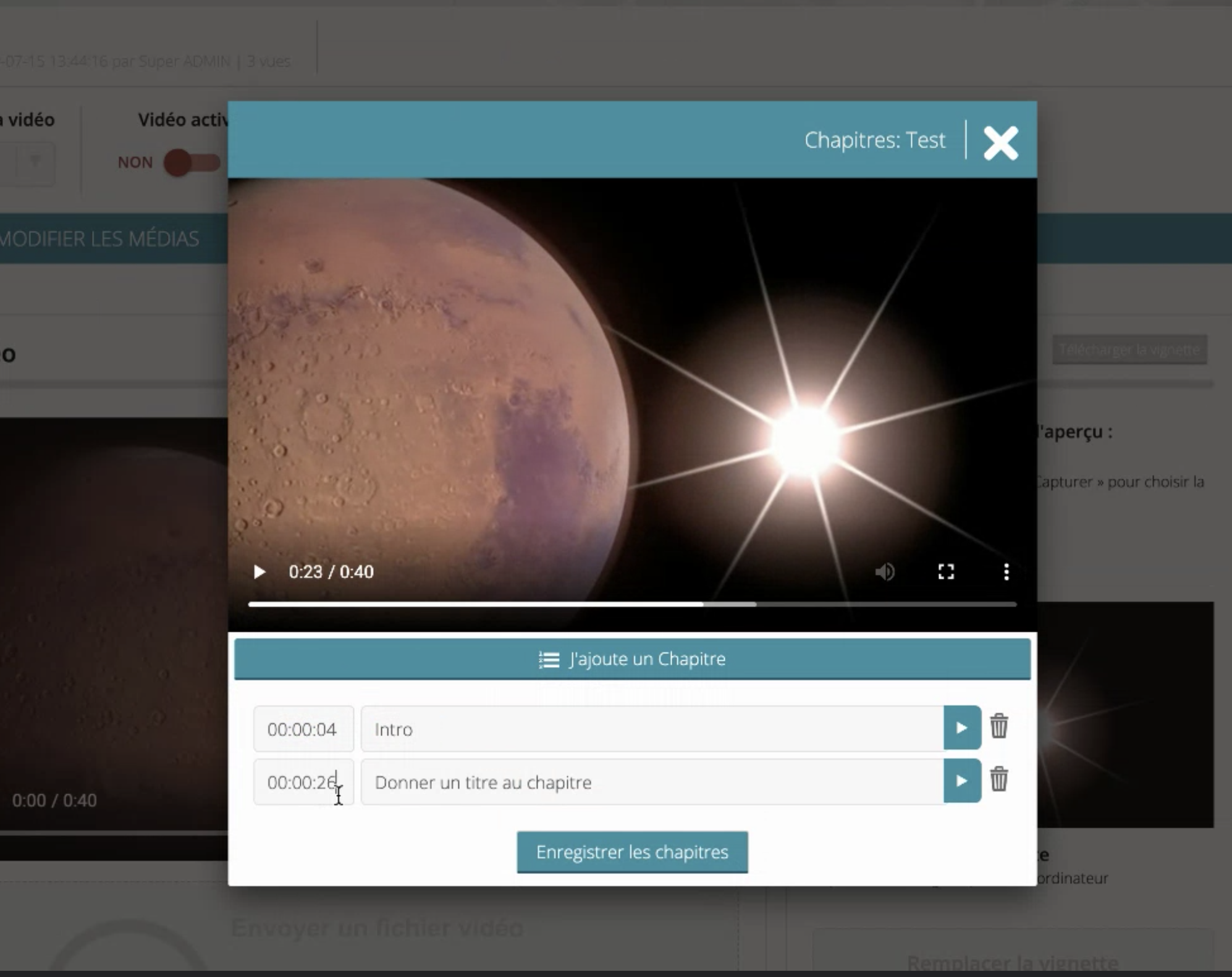
We needed to provide a native, scalable video management experience for LumApps customers — primarily communication teams managing corporate intranets. The existing Novastream interface wasn’t integrated into LumApps’ design system and lacked the UX consistency and modernity expected from a SaaS platform.
At the same time, LumApps’ component library wasn’t built for rich media workflows, which made it difficult to assemble a usable interface for video-specific use cases.
During these four months, I was the only LumApps “veteran” in the team. My role went beyond producing interfaces: I also onboarded the former Novastream team to LumApps’ mindset and product practices.
Because of tight deadlines, the MVP had to be scoped, designed, developed, QA-tested, and released in just four months. We reused existing LumApps components wherever possible, even if they weren’t optimized for video workflows. Despite this constraint, the MVP was ambitious and introduced:
This first version allowed users to:
While functionally complete, the interface was not fully tailored to the specifics of video content (subtitles, chapters, etc.), and early internal feedback confirmed usability and consistency issues.
In parallel with MVP development, we started prototyping a more refined Version B. The aim was to correct the MVP’s limitations and provide a more scalable, user-friendly foundation. Key improvements included:
Design critiques with the internal design team ensured alignment with LumApps standards and scalability across other product areas.
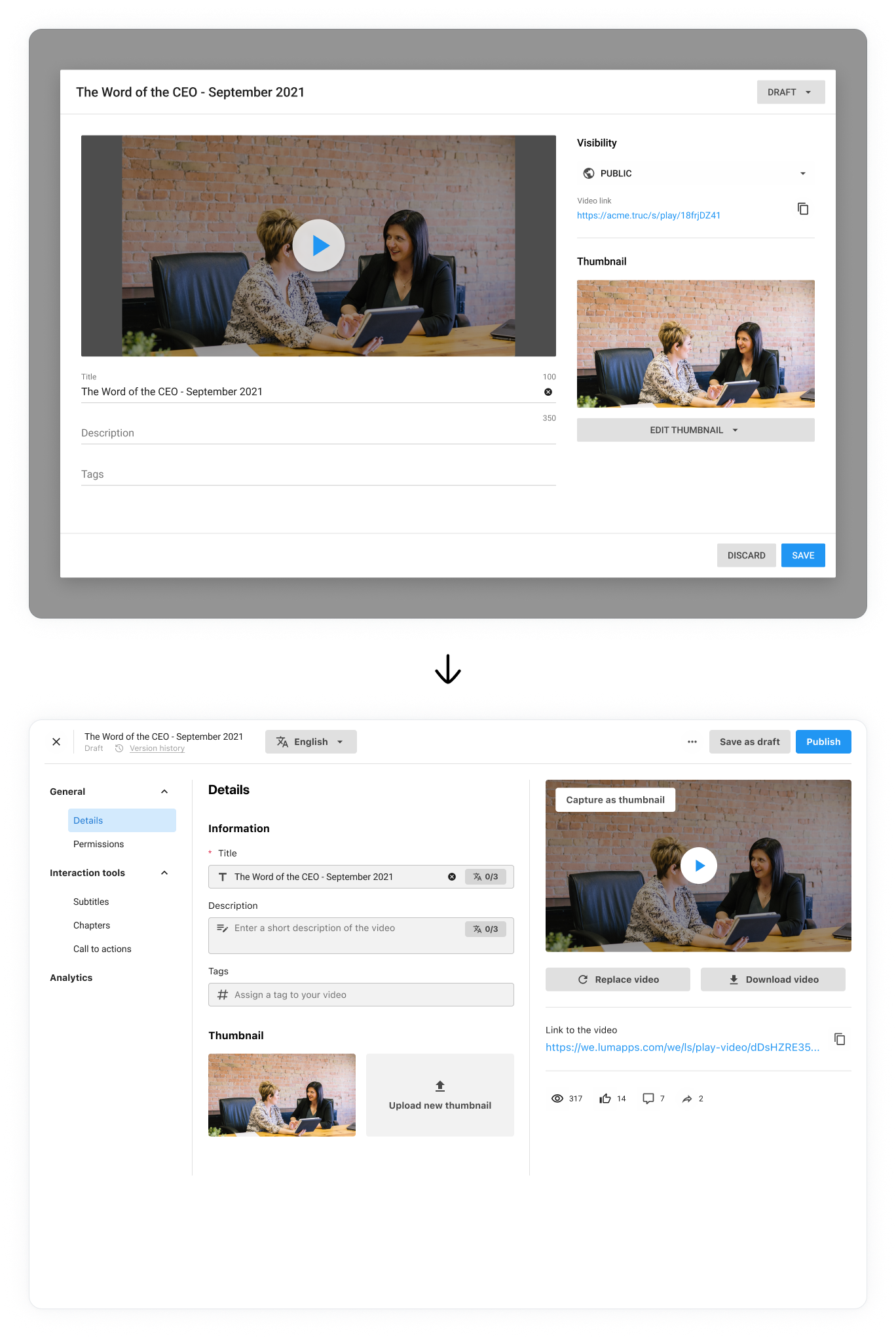
Unlike most projects, we did not run usability tests on MVP prototypes. Instead, testing happened directly in production once the MVP was live. These sessions were partly used to validate the MVP, but also to evaluate Version B prototypes and collect further needs.
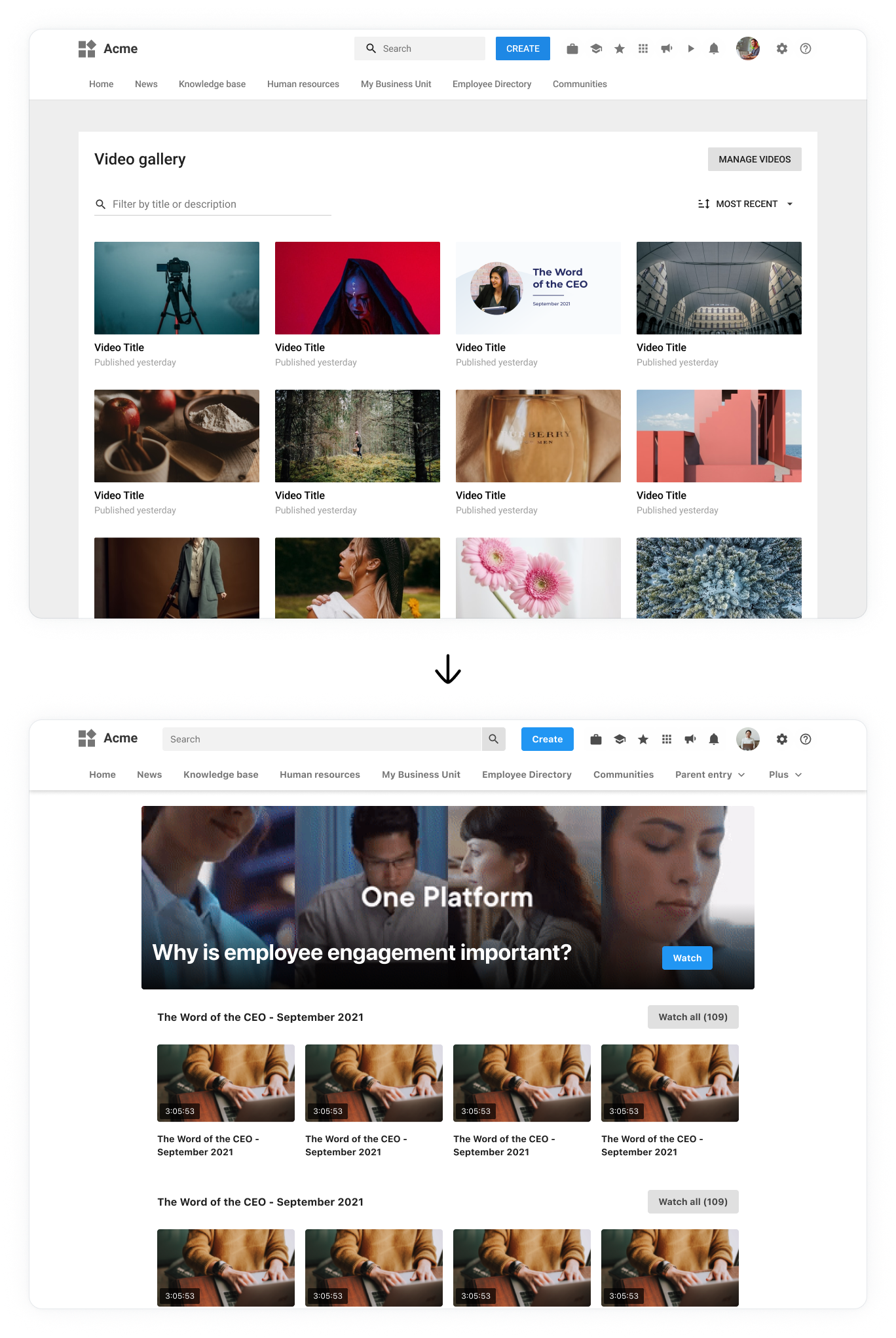
The outcome confirmed strong interest in Version B and highlighted new requirements such as playlist creation and video gallery customization.
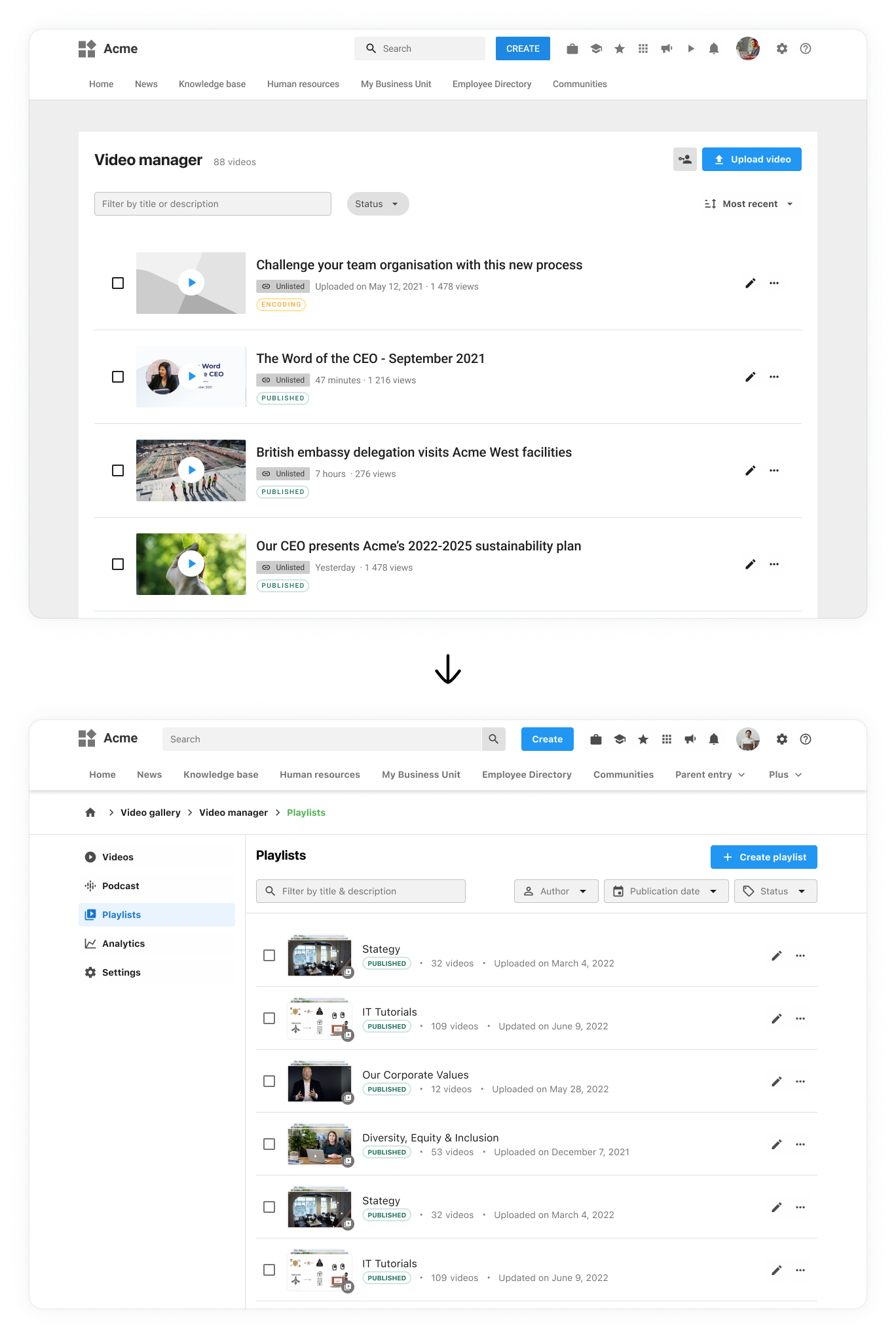
The interface of Version B established a new visual and structural direction, which progressively influenced other parts of the product.
@2025
Designed with ❤️ in Lyon, France


